

Services
Stamped & Decorative Concrete
Custom stamped and decorative concrete patios, walkways, steps and pool decks in Albany, Schenectady and Clifton Park, NY. See the work, then get a free estimate.
Stamped, textured, and decorative concrete offers a combination of durability and style — transforming ordinary concrete into beautiful surfaces that mimic the look of natural stone, slate, brick, or tile. We install custom decorative concrete for homeowners throughout Albany, Schenectady, and Clifton Park.
Stamped concrete is a popular choice for patios, pool decks, and outdoor living spaces because it provides a high-end appearance while maintaining the strength and longevity of concrete. Come see it before you commit: our display center is open 24/7 for self-guided browsing, so you can walk the actual surfaces and patterns any time (nobody's on site unless you call ahead to meet someone).
Patios
The most common project we do. A stamped patio gives you a finished, continuous outdoor surface with the look of stone, slate, or brick. We'll lay out the shape around how you actually use the space: where the table goes, where the grill lives, how people walk out from the door.
Walkways
Front walks, side paths, and the run from the driveway to the door. Stamped walkways tie the house and the driveway together instead of looking like three separate projects. Pattern and color get matched to the patio or the house — not picked from a catalog in isolation.
Steps & Staircases
Poured steps built to code with consistent rise and run, finished in the same pattern as the surface they connect. This is the part people underestimate: mismatched or uneven steps are what make an otherwise nice patio feel unfinished — and they're the part you feel underfoot every day.
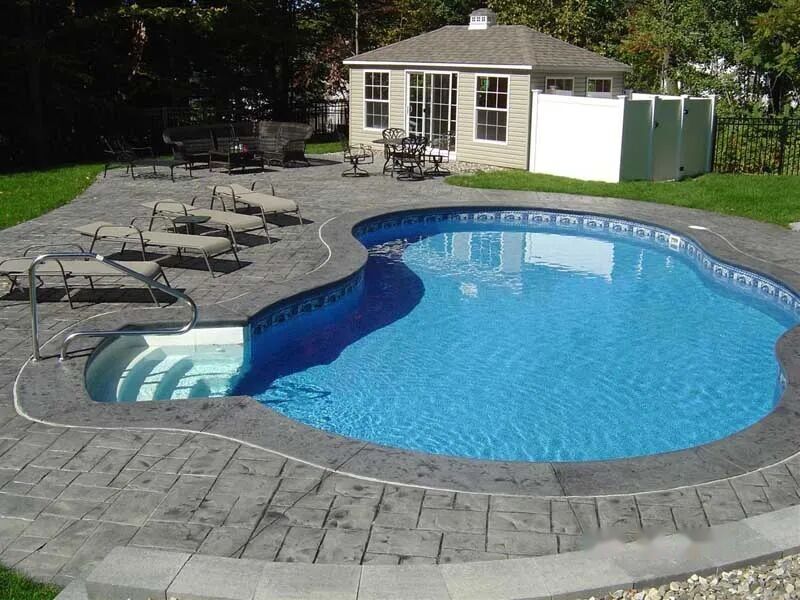
Pool Decks
Textured decorative finishes for pool surrounds. See the full pool area work on the Pool Areas page.
Patterns & Textures
Slate, ashlar, cobblestone, wood plank, and custom borders — each in multiple texture depths. The main surface color is mixed throughout the concrete, so it reads like stone rather than paint sitting on top. The one place we use a cast-on color hardener is decorative borders, where it gives the accent band its own richer color. Pattern choice changes how the color reads too: deeper textures look more dramatic; tighter patterns read more formal. Browse the colors below, then come stand on the real thing at the display center.


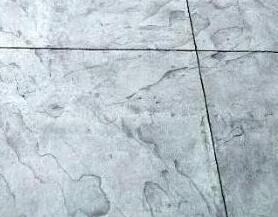


Colors
This is the part of the page to send to whoever you're deciding with. Every stamped concrete surface we pour comes down to a few choices — a base color, an antique release, a pattern, and an optional decorative border — and this is where you browse the color side of it.
One honest warning before you scroll: color on a screen is an approximation. The same chart color reads differently in morning sun and evening shade, wet and dry, sealed and unsealed. Shortlist here, then come stand on the real surfaces at the display center. It's open 24/7 for exactly this reason (nobody's on site unless you call ahead to meet someone).
Every stamped surface is four choices:
- Pick a pattern
- Choose a base color
- Add an antique highlight
- Optional decorative border
How stamped concrete color works
The base color is integral — mixed through the concrete itself, not painted on — so it can't chip or peel off. The antique release is a second, contrasting color; we apply it the following day, before sealing, so it settles into the low spots and joints the way weathering settles into real stone. That two-tone depth is why good stamped concrete reads as stone and bad stamped concrete reads as paint.
Base colors
Our color charts come from the major manufacturers — BASF, Solomon, Scofield, and Butterfield. When you've made your pick, just tell your estimator the chart name and the color. Thinking about a premium color level? Ask the estimator to calculate the yardage so you see the real cost of the upgrade, not a guess.


















Coping options
Coping is the cap that finishes a pool edge or the top of a wall — these are the three profiles we form it in.
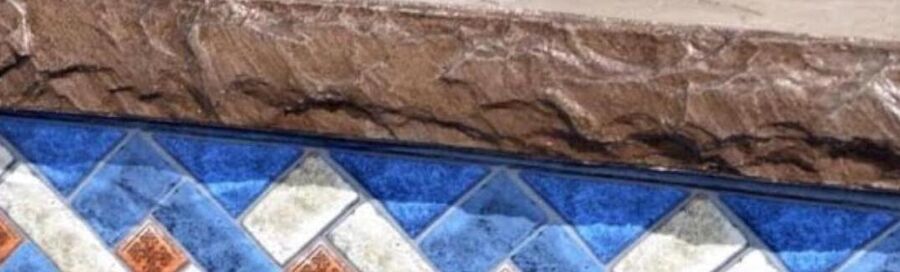


Sealing is what keeps the color from going flat. It's part of the color story: sealer deepens the base color, sharpens the contrast with the antique release, and gives the surface its finished sheen — we use solvent-based or water-based sealers. It also protects against moisture, road salt, and staining, and it's the difference between a surface that still looks new in year five and one that doesn't. We seal every install and offer resealing on concrete we didn't pour; resealing every 2–3 years is the whole maintenance program.
How the job runs
Short version of how a job actually runs, so nobody's guessing:
- Free estimate. We come out, look at the space, talk through what you want. No charge, no pressure.
- Design and materials. Pattern, color, and layout — and you can go stand on the real thing at the display center before deciding.
- Install. We handle prep, forms, pour, stamp, and finish. You'll know the schedule and we'll keep you posted as it moves.
- Seal and walk-through. We seal it, clean up, and go over care with you before we leave.

Frequently asked questions
How long does stamped concrete last?
Properly poured and sealed, decades. Resealing every few years is the whole maintenance job.
Does it crack?
Concrete moves. We put control joints in so it cracks where it's supposed to, along a line you don't notice, instead of across the middle of your patio.
Can you match my existing patio?
Usually, and the older the surface the more the honest answer is "very close" rather than "identical" — existing concrete has weathered and the sealer has aged. Bring a photo, or better, come by the display center and point at the one you want, or let the estimator see it in person.
Will the color fade?
Integral color can't peel, but sun and salt will slowly mute any surface left unprotected. Sealing every 2–3 years is what keeps the color rich — it works like sunblock for the concrete.
What does upgrading the color level cost?
It's priced by yardage, so it depends on your project's size. Ask the estimator to run the calculation — you'll get a real number for your square footage instead of a vague "premium colors cost more."
Why can't I just pick a color from this page?
You can shortlist here. But screens lie about color, and a two-inch chip lies about a four-hundred-square-foot patio. Ten minutes at the display center replaces both — it's the single best decision-quality step in the whole project.
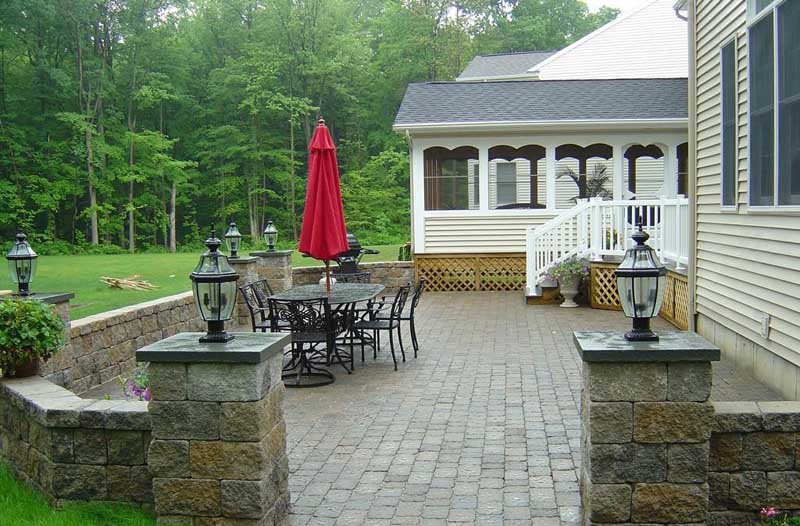
Do pavers and stamped concrete come in the same colors?
They rhyme but don't duplicate — paver colors are baked in at the factory, stamped colors are mixed on site. If you're matching a paver walkway to a stamped patio, we'll pair them at the display center where you can see both side by side.